
When I started engaging with art education, instructors often assigned copying famous works of art as a valuable exercise. At first, I questioned its value, believing that creating art was primarily about self-expression and personal development. Copying seemed unrelated to these goals, making its purpose unclear to me.
My first time copying another artist's piece was only a few years ago, and the experience was surprising.
The initial thinking that copying another artist's work could be of creative and developmental value showed up while learning piano. I started formal piano lessons about 4 years ago. While I had tried to teach myself on a somewhat successful path, I realized formal teaching with hands-on guidance and structure would enable me to make very large jumps in development and ensure I was learning properly.
Once my piano-playing skills were established at a foundational level, I was given primarily classical music pieces to learn. Essentially, I was copying another artist's creative output. Unlike with visual art, I never questioned this as the proper next step or as of value to me as a student. The idea of learning another composer’s piano music seemed the logical next step in piano, and I never considered it copying.
As I worked through these original, unarranged pieces, I had to deconstruct them into smaller segments I could learn from. I repeated these sections until I understood them, and they became part of my muscle memory as a pianist.
I continued this process with each segment, gradually advancing through the piece.
Eventually, I connected the practiced segments, experiencing the composition as a whole.
Doing this created a unique connection with the composer by allowing me to better understand their intentions and the journey they wanted to guide the listener through. It felt as if I got to know the composer personally, which was a completely new experience for me.
My first time really copying a painting was only a few years ago. I had hit a point of stagnation as a painter. I usually have a pool of ideas and inspiration for paintings and topics that exceed my output and time capabilities. I am never short of subjects to explore. However, sometimes I do hit dead spots. I guess these would be what's called writer's block for an author. I get to the point where nothing seems worth initiating or committing to.
I dislike creating in this space because my work rarely feels high-quality or interesting, and this sometimes feels damaging to me as an artist. With paint, I create a permanent artifact that sits in my studio or sketchbook, leaving an impact. By contrast, a bad piano day means my creativity simply dissipates into the ether, never to be heard again.
I decided to focus my creativity and use paint actively—I decided to copy.
I turned to The Museum of Modern Art, New York, a book I love to start my day with, preferring art books over scrolling the news.
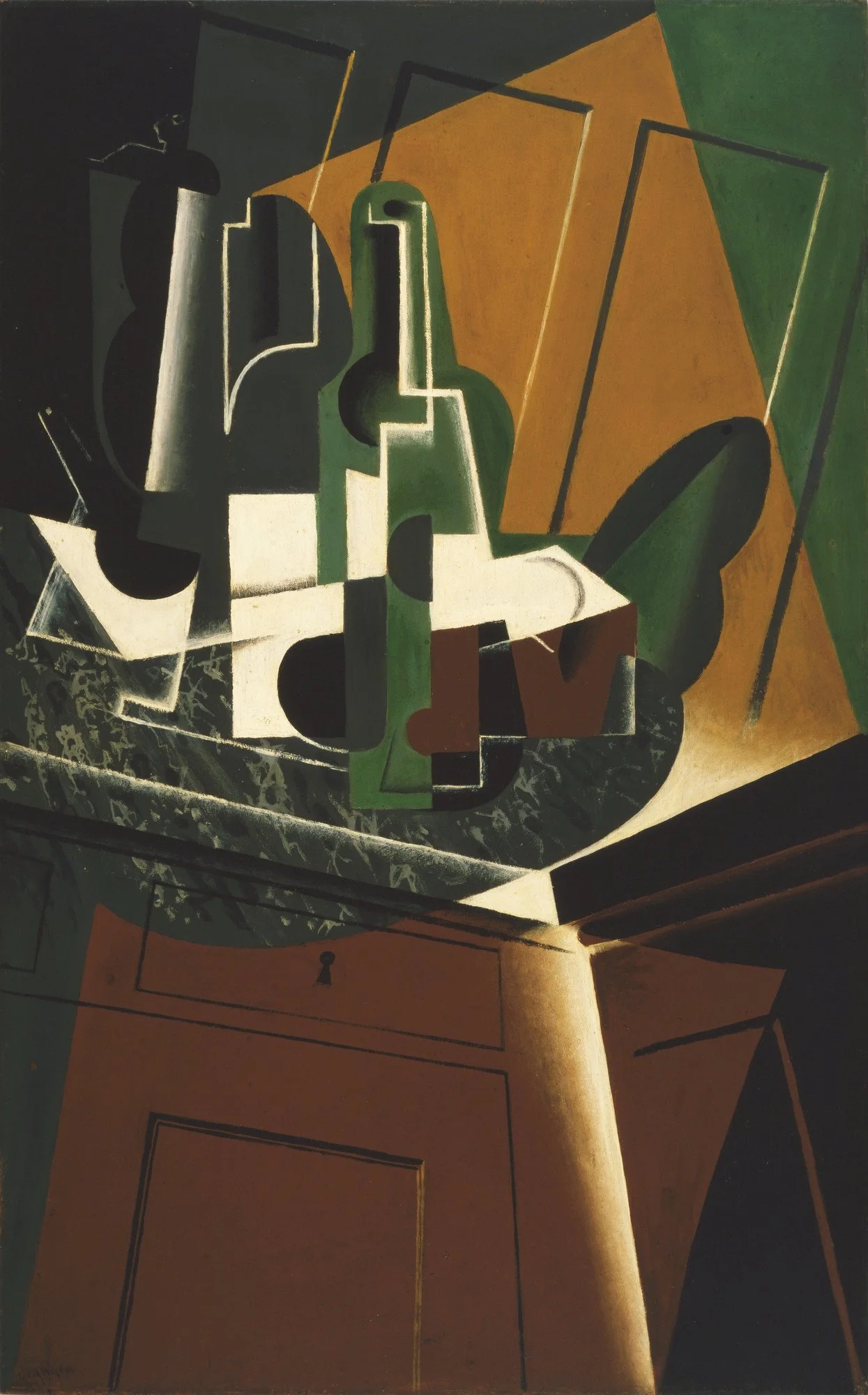
Juan Gris. The Sideboard. 1917 .
oil on canvas. 32 3/4 x 51”
I found something of interest: The Sideboard by Juan Gris from 1917.
The painting’s unfamiliar style intrigued me. Its dark, desaturated palette appealed to me, and the subject—bottles on a table—was clarified by the title. Still, I didn’t initially understand Gris’s approach.
This all changed when I started doing my own version in gouache. The artist’s brilliance was revealed. It was a fascinating experience. The fullness Juan Gris used, the interesting way of conveying shadow, shapes, and lines, was revealed. The use of color was very clever and thoughtful. I was completely immersed in this painting. It was as if I were on a mini adventure with Juan Gris. I was connecting with him in the same way I would connect to the composer in piano.
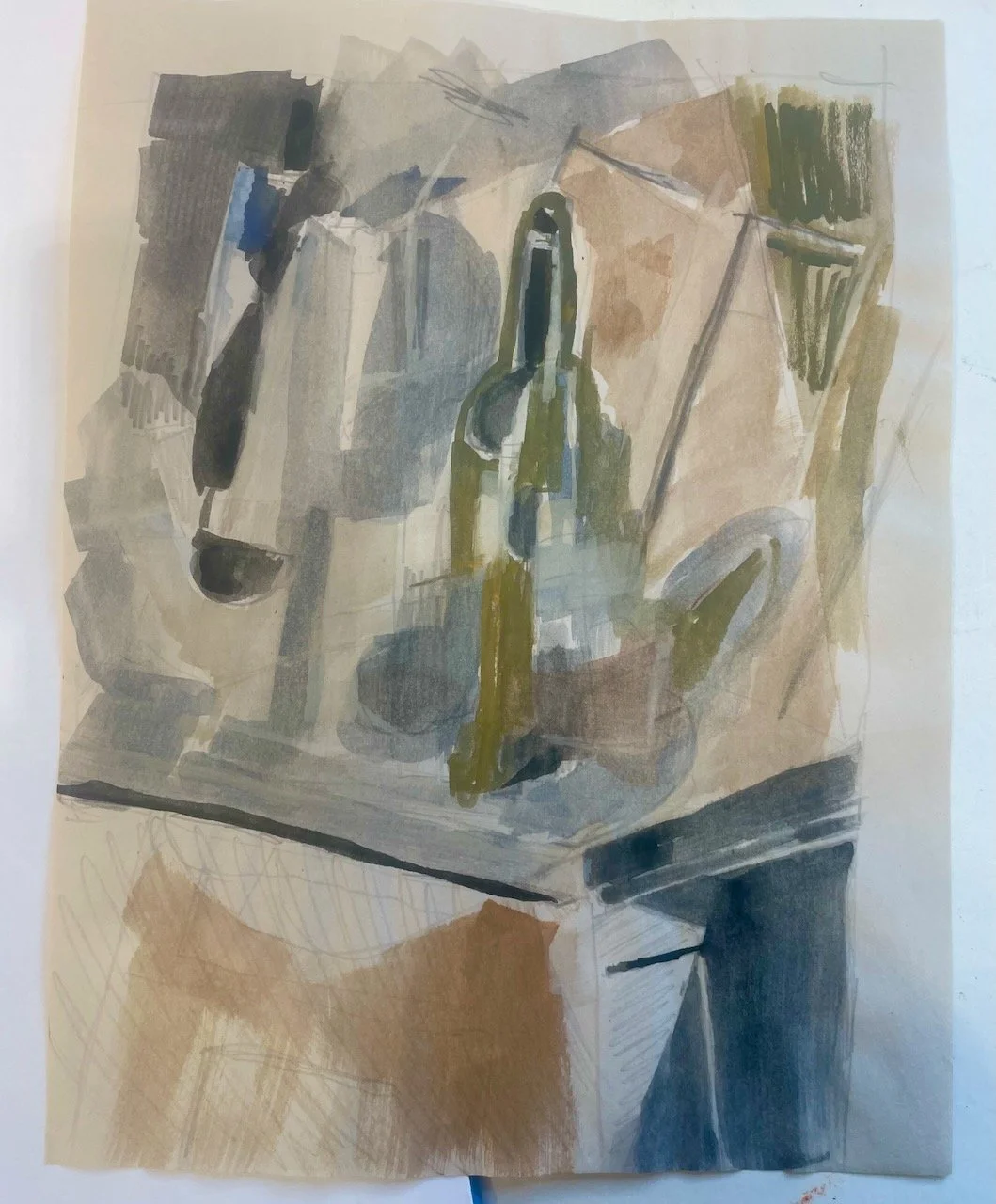
Untitled
8x10’ gouache on paper
matted and framed
I realized that copying not only visual art but also literature and poetry can shape our perspectives. This approach offers an interesting way to explore how our brains develop through imitation.
How could you use these exploration and learning techniques to enhance your learning and discovery?
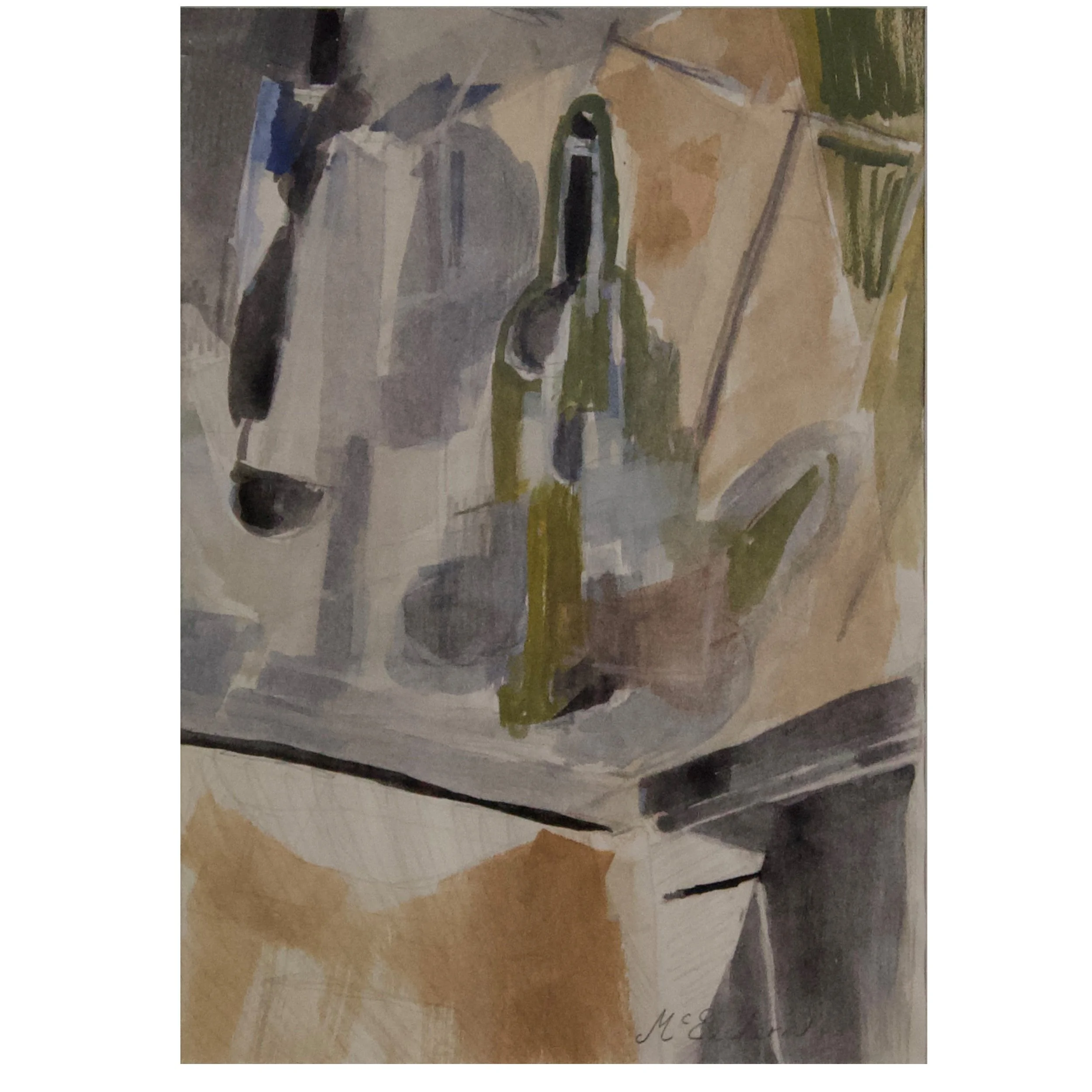
gouache on canvas paper
10 × 7.5.”
beautifully matted and framed with glass.
Dimensions of framed work are 18.5 × 15."